Key Insights
- Certified organic is a legal standard, not a marketing claim. It means a licensed inspector verified your operation annually — not just that you avoid synthetic inputs.
- The verification gap is the whole issue. “Naturally grown,” “chemical free,” and “no spray” are unverified by anyone. Certified organic means an independent inspector walked the fields and checked the records.
- Seed garlic is different from eating garlic. When you plant it, anything it was grown with goes directly into your soil — potentially affecting your soil biology and, for certified growers, your own certification status.
- The price premium reflects real costs. A three-year unpaid transition period, annual certification fees, inspector visits, organic-approved inputs, and detailed record-keeping all add up. You’re paying for accountability and traceability.
- You can verify any organic claim in two minutes. The USDA Organic Integrity Database is public. Search a farm’s name before you buy.
- Organic certification makes farms better, not just compliant. The discipline required — soil planning, annual inspections, detailed records — tends to produce more consistent, disease-free seed stock regardless of the label.
What Certified Organic Seed Garlic Actually Guarantees — And What It Doesn’t
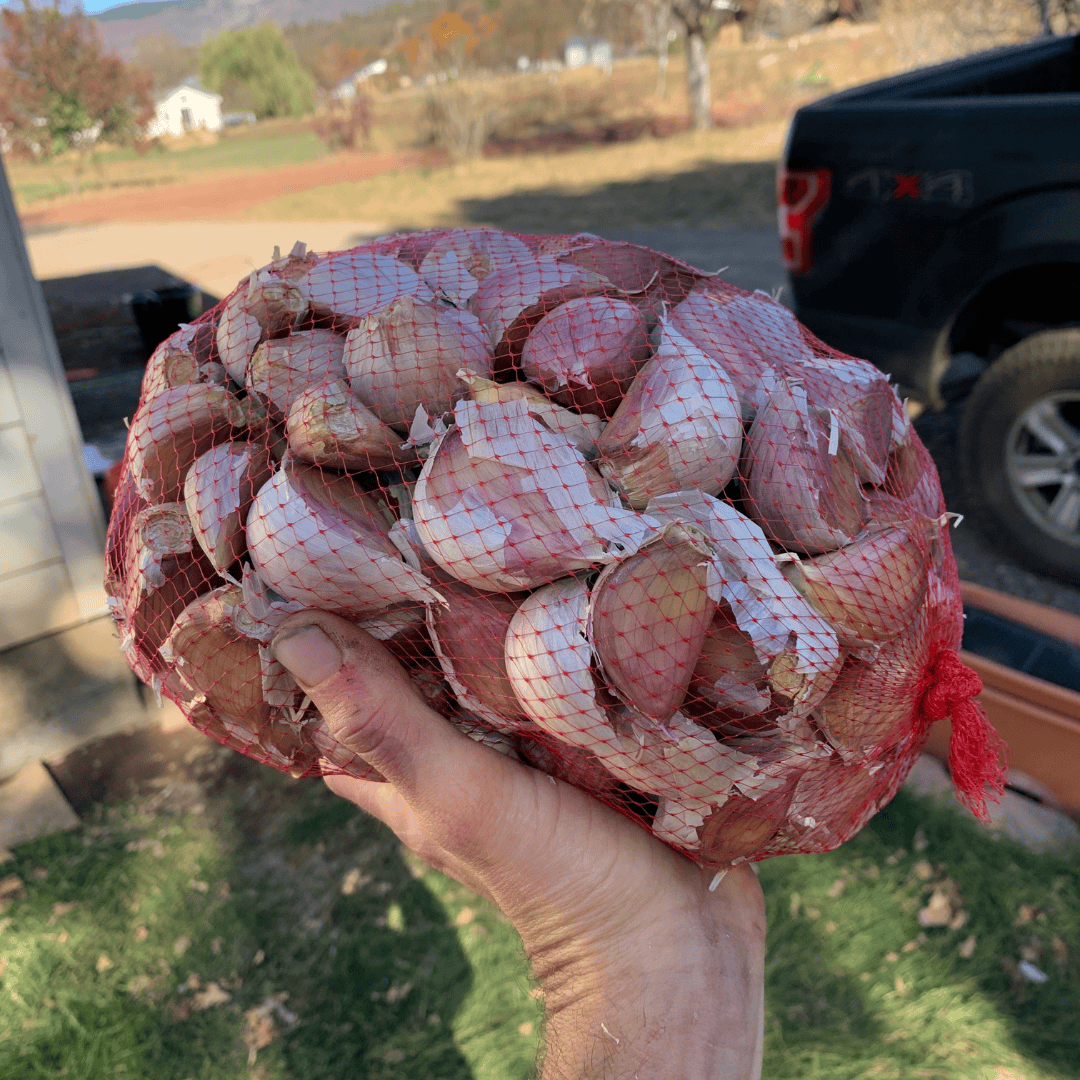
Most people asking what is seed garlic are already thinking about planting — and that’s exactly why certified organic matters more here than it does for garlic you’re buying to cook. At Basaltic Farms we grow certified organic hardneck and softneck varieties in volcanic soil at 3,300 feet — and what goes into that seed matters as much as how it’s grown. Seed garlic is planted clove-by-clove directly into your soil, where it becomes part of your growing system. Whatever it was grown with comes with it.
I’ll be upfront about something. When I first started farming I thought organic certification was mostly a marketing thing. I figured if I wasn’t spraying chemicals and I was taking care of my soil, that was good enough and the label didn’t really matter. It wasn’t until I actually went through the certification process with CCOF — California Certified Organic Farmers — that I understood what certified organic really means and why it matters so much for certified organic seed garlic specifically.
There’s a lot of confusion out there about what the certified organic label actually guarantees versus what people assume it means. The stakes are higher than when you’re buying organic produce for dinner. What you put in your soil carries forward into your crops, your harvest, and potentially your own organic certification if you’re pursuing that. So let me walk you through what certified organic actually means in practice, what we went through to earn that certification, and why I’ve come to believe it genuinely matters for anyone serious about growing quality garlic.
What Certified Organic Actually Means Under USDA Standards
Certified organic under the USDA National Organic Program means the land where the crop is grown has been free of prohibited synthetic substances for a minimum of three years. It means no synthetic fertilizers, no synthetic pesticides, no synthetic herbicides, and no genetically modified organisms were used in producing the crop. And it means all of that has been verified through inspection by an accredited third-party certifying agency.
It’s not just about what you don’t use. Organic certification also requires a written organic system plan that documents how you manage soil fertility, how you handle pest and disease issues, how you prevent contamination from neighboring conventional operations, and how you maintain records for everything that goes into or comes out of your fields.
The key word in all of this is verified. Anyone can say they farm organically. Certified organic means someone independent actually checked and confirmed it. That distinction is the entire point of the certification system.
The Difference Between ‘Organic’ and ‘Naturally Grown’
This is where things get tricky and where I see a lot of buyers get confused. You’ll see seed garlic advertised as “naturally grown,” “chemical free,” “no spray,” or “grown using organic methods” and those phrases can mean almost anything because nobody verifies them. A grower can claim to use organic methods without ever having an inspector set foot on their property.
I’m not saying that every non-certified grower is being dishonest. There are plenty of small growers who genuinely farm without synthetic inputs but haven’t pursued organic certification for various reasons, usually cost or paperwork. But as a buyer, you have no way to verify those claims without visiting the farm yourself.
Certified organic, on the other hand, means a licensed inspector reviewed the operation, checked the records, walked the fields, and signed off that everything meets the USDA standard. That paper trail exists and you can verify it. When I’m spending real money on seed garlic that’s going into my soil and my livelihood depends on the outcome, I want that verification.
What the Certification Process Looks Like for a Garlic Farm
Getting certified organic isn’t something that happens overnight. It’s a multi-year process that requires commitment, record keeping, and patience. Here’s a simplified version of what’s involved based on our experience.
First, the land has to go through a three-year transition period where no prohibited substances are applied. During this time you’re farming organically but you can’t label or sell your crops as certified organic. It’s three years of investment without the premium pricing that organic commands, and that’s a real financial commitment.
Once the transition period is complete, you apply to a certifying agency. For us that was CCOF. You submit your organic system plan, which documents everything about how you farm. Your soil amendments, your pest management approach, your weed control methods, your crop rotation plan, your record keeping system, your buffer zones from neighboring conventional operations. Everything.
Then an inspector comes to your farm. They walk your fields, review your records, check your inputs, look at your equipment, verify your buffer zones, and ask a lot of questions. If everything checks out, you receive your organic certification. And then they come back every year to do it again. It’s not a one-time thing. It’s an ongoing annual commitment.
Why Organic Certification Matters Specifically for Seed Garlic
Here’s the part that really changed my thinking about organic certification as it relates to seed garlic specifically. When you buy eating garlic, you consume it and it’s done. But when you buy seed garlic, you’re putting it into your soil where it becomes part of your growing system.
If the seed garlic you plant was grown with synthetic fungicides, those chemical residues can carry over into your field. If it was grown with systemic pesticides that the plant absorbs, those compounds are in the cloves you’re planting. For growers who are maintaining or pursuing their own organic certification, planting non-organic seed garlic can actually put your certification at risk.
Beyond certification compliance, there’s a practical soil health argument. The whole premise of organic farming is building a living soil ecosystem with beneficial microorganisms, mycorrhizal fungi, and healthy biological activity. Introducing seed stock that was grown with substances that suppress that biology works against what you’re trying to build. It’s like inviting someone into your clean house who’s been rolling around in something you’ve spent years cleaning out.
What It Costs to Get and Maintain Organic Certification
I want to be transparent about this because the cost of organic certification is one of the reasons certified organic seed garlic costs more than non-certified alternatives. And I think buyers deserve to understand what they’re paying for.
The annual certification fee varies by certifying agency and farm size but for a small to medium garlic operation you’re typically looking at anywhere from a few hundred to a couple thousand dollars per year for the certification itself. On top of that there’s the inspector visit which has its own fee, plus the cost of organic-approved inputs which often cost more than their synthetic equivalents.
The USDA does offer cost-share programs that reimburse a portion of organic certification costs, which helps. But the real cost of organic isn’t just the paperwork. It’s the three-year transition period where you’re investing in organic practices without being able to command organic prices. It’s the additional labor for things like hand weeding instead of herbicide application. And it’s the ongoing record keeping and documentation that takes real time and attention.
When you buy certified organic seed garlic, a portion of that price supports all of these ongoing costs. That’s not a markup, it’s the real cost of doing things the right way.
How to Verify a Farm’s Organic Certification
This is something every buyer should know how to do and it only takes a minute. The USDA maintains a public database called the Organic Integrity Database where you can search for any certified organic operation in the country. Just search for the farm name or certifying agent and you’ll see their current certification status, what products they’re certified for, and when their last inspection was.
You can also ask the farm directly for their organic certificate number and the name of their certifying agency. Any legitimate certified organic operation should be happy to share this information. If a farm claims to be certified organic but won’t provide their certificate details or can’t be found in the USDA database, that should tell you something.
At Basaltic Farms we’re certified through CCOF and our certification is current and verifiable. We’re proud of it and we’ll share our documentation with anyone who asks.
Common Misconceptions About Organic Seed Garlic
1. ‘Organic just means more expensive’ Organic certification isn’t a price markup, it’s a verified set of standards that have real costs to maintain. The price difference reflects those costs, not an arbitrary premium. What you’re paying for is accountability and traceability.
2. ‘All small farms grow organically anyway’ Many do, but not all. Without certification there’s no verification. Some small farms use synthetic products occasionally or have contaminated soil from previous land use. Certification removes the guesswork.
3. ‘Organic means pesticide-free’ Organic farming does allow certain naturally derived pest management tools approved by the National Organic Program. What it prohibits is synthetic chemicals. The distinction matters because organic pest management exists, it just looks different from conventional approaches.
4. ‘It doesn’t matter for seed garlic since you’re just planting it’ It actually matters more for seed garlic because you’re putting it directly into your soil. Chemical residues in seed stock can affect soil biology, and for certified organic growers, non-organic seed garlic can compromise your own certification status.
5. ‘I can just grow my own seed garlic to avoid this issue’ You can, and many growers do. But your first generation of seed stock still needs to come from somewhere, and starting with certified organic seed garlic means you’re beginning with the cleanest possible foundation for your own seed program.
Our Experience Getting Certified Through CCOF
I want to share a bit about our own journey with organic certification because I think it illustrates why I’m so passionate about this now even though I was skeptical at the beginning.
When we started Basaltic Farms we were growing in this incredible volcanic soil near the base of Mt. Shasta. The soil here is naturally rich with minerals from ancient lava flows which gives our garlic an amazing foundation. We knew from the start that we didn’t want to use synthetic anything because the soil was already so good on its own. But getting certified organic was a whole different level of commitment.
Going through the CCOF process taught me more about farming than probably anything else I’ve done. Writing the organic system plan forced me to think through every aspect of our operation in a systematic way. The inspector visits pushed me to keep better records and be more intentional about every decision. And having that third-party accountability means our customers know exactly what they’re getting when they buy from us.
Was it a lot of work? Absolutely. Was it worth it? Without a doubt. It’s one of the things I’m most proud of about what we’ve built here at Basaltic Farms.
If you want to see what that process produced, take a look at our current seed garlic varieties on the site.
Does Organic Seed Garlic Actually Perform Better?
This is the question everyone really wants answered and I’m going to give you my honest perspective. I’ve seen our certified organic seed garlic produce incredible harvests year after year, but I’m not going to claim that organic certification by itself makes garlic grow bigger or taste better. What I will say is that the practices required by organic certification — healthy soil management, careful variety selection, disease prevention through field inspection — all of those things contribute to producing better seed stock.
A well-managed organic operation that’s building soil biology, selecting the strongest genetics, and maintaining clean disease-free fields is going to produce seed garlic that gives growers a better starting point than seed from a less careful operation. The certification is the mechanism that ensures those practices are actually happening.
So does organic seed garlic perform better? In my experience, yes, but it’s not because of the label. It’s because of what the label requires the grower to do.
Frequently Asked Questions
Understanding Organic Certification
Q: What does USDA certified organic actually mean for seed garlic? A: It means the garlic was grown on land free of prohibited synthetic substances for at least three years, following an approved organic system plan, and verified through annual on-site inspection by a USDA-accredited certifying agency. It’s a legally regulated federal standard — not a marketing term, not a self-reported claim.
Q: What’s the difference between “naturally grown” and certified organic? A: Unregulated phrases like “naturally grown,” “chemical free,” and “no spray” are verified by no one. Certified organic means an independent, licensed inspector walked the fields, reviewed records, and confirmed the operation meets USDA National Organic Program standards. The difference is third-party accountability. That’s the whole point.
Q: Can a farm lose its organic certification? A: Yes — and that accountability is what gives the certification its value. If an inspector finds violations, if prohibited substances are detected, or if records show non-compliance, certification can be suspended or revoked. Annual renewal isn’t a formality. It’s a real check.
Buying Certified Organic Seed Garlic
Q: Why does certified organic seed garlic cost more than conventional? A: The price reflects real, verifiable costs: a three-year transition period where farms invest in organic practices without being able to charge organic prices, annual certifier fees, inspector visit costs, higher-priced organic-approved inputs, and detailed ongoing record-keeping. What you’re paying for is accountability and a documented chain of custody — not a markup.
Q: How can I verify that a farm is actually certified organic? A: Use the USDA Organic Integrity Database — it’s public and takes about two minutes. Search by farm name and you’ll see current certification status, certifying agency, and what products they’re certified for. You can also ask the farm directly for their certificate number. Any legitimate certified organic operation will share it without hesitation. Basaltic Farms is certified through CCOF and our documentation is available on request.
Q: Do I need organic seed garlic if I’m not running an organic farm? A: Not from a compliance standpoint, but it still gives you disease-inspected, carefully selected seed stock grown without synthetic chemical residues — a cleaner starting point for any grower regardless of certification goals. If you’re thinking about organic certification down the road, starting with certified organic seed also builds a cleaner history for your fields.
Q: Where can I buy certified organic seed garlic? A: Buy directly from certified farms that can provide their certificate details and variety-specific information. At Basaltic Farms we grow certified organic seed garlic in multiple hardneck and softneck varieties, grown in mineral-rich volcanic soil in Northern California. See current availability and pricing on our site.
For Growers Pursuing Organic Certification
Q: Do I need to use organic seed garlic to get my own farm certified? A: Under NOP rules, certified organic seed is required when commercially available. If a specific organic variety isn’t available, you may be able to use non-organic seed — but your certifier will want documented evidence that you made a genuine effort to source organic first. Starting with certified organic seed removes that compliance burden entirely.
Q: Will planting non-organic seed garlic put my certification at risk? A: It can. If certified organic seed garlic is commercially available for the varieties you want to grow and you use non-organic seed without proper documentation and justification, that’s a potential non-compliance finding during your annual inspection. It’s not worth the risk when certified organic options exist.
Q: Is organic certification worth the cost for a small garlic farm? A: It depends on your market and your margins. If your customers value organic and will pay the premium, the numbers usually work — especially with the USDA cost-share program that reimburses a portion of annual certification costs. Beyond the financial calculation, the discipline certification requires — detailed record-keeping, annual inspections, systematic soil planning — tends to make farms run better. That’s been our experience.
Grow With Confidence
When you plant certified organic seed garlic, you’re starting with something that’s been verified, inspected, and held to a standard. You know where it came from, how it was grown, and that nobody cut corners along the way. That peace of mind is worth something, especially when your harvest and potentially your own certification depend on it.
At Basaltic Farms we’ve been certified organic through CCOF since early in our farming journey and it’s a commitment we take seriously every single day. We grow our seed garlic in mineral-rich volcanic soil, we select our seed stock from the strongest plants in our fields, and we inspect and grade every bulb before it ships to our customers.
Browse our certified organic seed garlic varieties to see what we’re growing this season, or visit our pricing page for current rates and availability. If you have questions about organic certification or anything else, reach out through our contact page and we’ll be happy to help.
Resources
University Extension & Research
- Garlic Production — Penn State Extension
- Garlic — Cornell Vegetable Program
- Garlic Postharvest Facts — UC Davis Postharvest Center
USDA Organic Regulations
- Seeds and Planting Stock Practice Standard — USDA AMS
- NOP Guidance 5029: Seeds, Annual Seedlings, and Planting Stock — USDA AMS
- USDA Organic Integrity Database (linked above)
Certification
- CCOF — California Certified Organic Farmers (linked above)
- USDA Organic Certification Cost-Share Program (linked above)
About This Guide
Zack Schallert put this guide together from years of actually doing this at Basaltic Farms — a CCOF and USDA certified organic garlic operation in McArthur, California, farming at 3,300 feet in volcanic basaltic soil.
Everything here comes from either university research, USDA regulatory sources, or the team’s own experience going through the certification process firsthand — including the parts that were harder than expected. This guide gets updated as standards change and as the farm learns more.