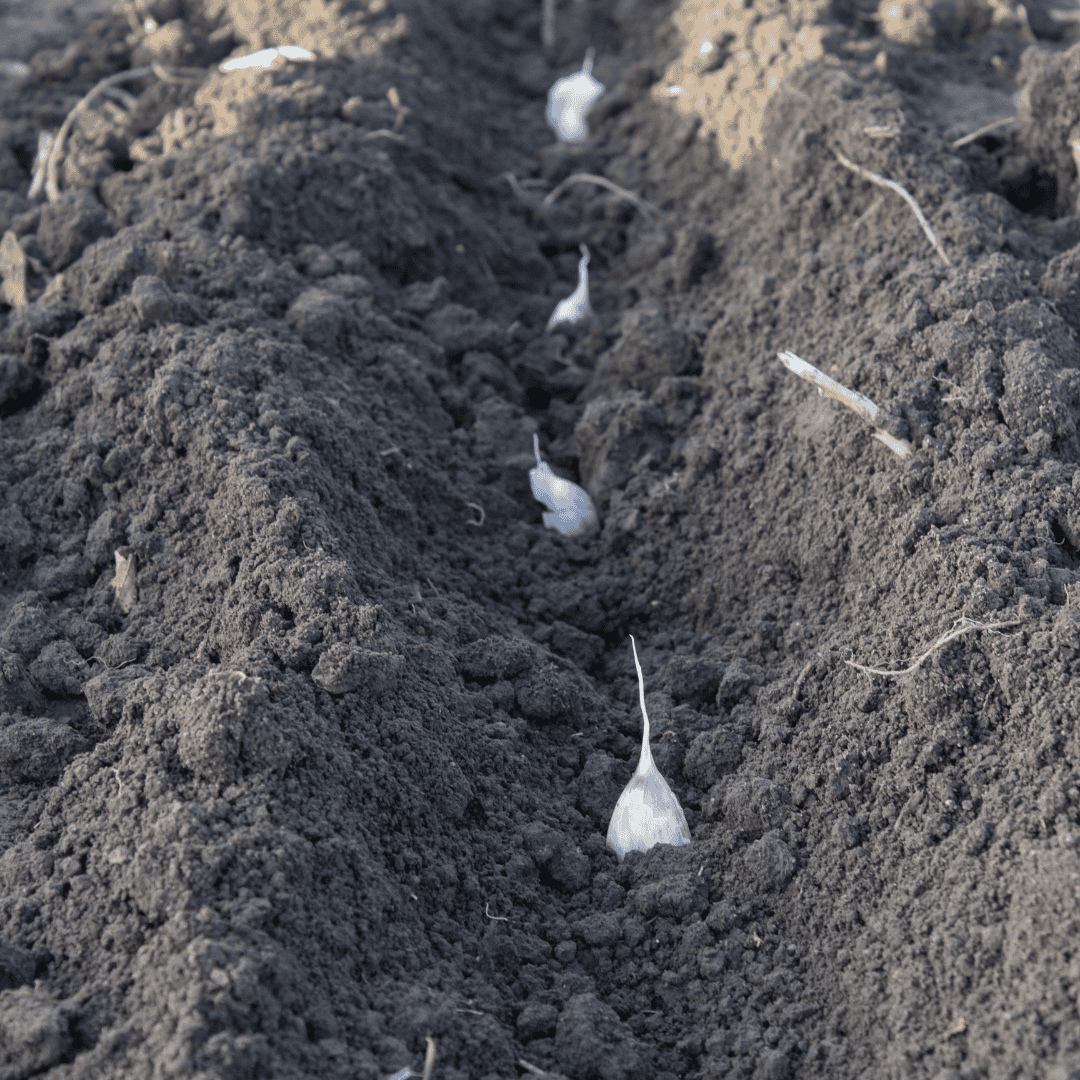
We didn’t name this place Basaltic Farms to sound clever. We named it after the ground we stand on. When Dad closed escrow on the land up in McArthur a year to the day after the Tubbs fire took everything we owned, the soil report came back describing a volcanic flood plain sitting on rich basaltic parent material, and that one word ended up becoming the identity of the whole operation. We named the farm after the soil because the soil was the thing that made us believe this ground had the potential to grow amazing crops. At the time we didn’t really understand what basalt actually did for plants — I’d tried to grow garlic once before and got nothing, and I was still figuring out the difference between organic matter and mineral content. It’s taken six years of farming this land and a lot of reading to really understand why this soil is different. So I want to share what peer-reviewed research actually says about volcanic soil garlic and why the ground underneath us matters as much to garlic as anything else we do out here.
KEY TAKEAWAYS |
|
What Volcanic Soil Actually Is
When people hear “volcanic soil,” a lot of them picture something that just fell out of a lava flow last week. The reality is less dramatic and honestly more interesting. Our land in the Fall River Valley sits on a relatively recent volcanic flood plain, part of a geological system that originates about 40 miles upwind at Lava Beds National Park. The lava flowed down into the surrounding valleys and broke down into the soil we farm on today. That’s what a certified organic farm like ours actually means at the ground level — organic practices built on top of a volcanic foundation.
Soil scientists have a specific classification for soils that form from volcanic parent material. They’re called Andisols, and they cover less than 1% of the global land surface but support a disproportionate amount of the world’s agriculture. According to an overview published through the University of Idaho’s soil orders program, Andisols have a unique set of chemical and physical properties that researchers just don’t see in other soil types, including very high water-holding capacity, low bulk density (meaning they’re loose and friable rather than compacted), and mineral content dominated by short-range ordered materials called allophane and imogolite.
Here’s the part that still amazes me. Research published in Biogeochemistry found that Andisols globally hold about 5% of the world’s total soil carbon despite covering less than 1% of land area. Translation: this kind of soil stores carbon and organic matter better than almost any other soil type on earth. When Reagan — our senior soil supervisor — talks about the shimmering silica, crusty calcium, and interminable iron you can see with your own eyes in our fields, he’s describing minerals that have been weathering out of basalt for centuries and getting locked into stable organic-mineral complexes that make the soil richer over time instead of leaching out.
It’s worth saying plainly that not every “volcanic” soil is the same. A 2022 study in Soil Systems compared Andisols formed from andesitic versus basaltic volcanic ash in different climates and found measurable differences in color, pH behavior, and mineral release between them. Basaltic parent material tends to be higher in iron, magnesium, and calcium than andesitic ash, which matters for what the soil can deliver to a crop like garlic. That’s the ground we farm on, and it’s why the name stuck.
The Water Retention Advantage
If you’ve ever tried to grow garlic in sandy soil that drains too fast or heavy clay that suffocates the roots, you already know that moisture consistency might be the single biggest factor in getting a healthy crop. Garlic’s in the ground for roughly eight to nine months. It has to survive fall planting, winter dormancy, spring regrowth, and the bulb-sizing sprint in late spring and early summer. Wild swings in soil moisture during any of those windows will stunt the bulb and thin out the wrappers.
This is one of the areas where the research on volcanic soils is really strong. A comprehensive overview of Andisols documented that these soils have dramatically higher water-holding capacity than typical mineral soils. The mechanism comes down to the short-range ordered clays I mentioned earlier — allophane and imogolite — which have specific surface areas of roughly 1,000 square meters per gram. For comparison, that’s several times higher than most clay minerals in a typical non-volcanic soil. More surface area means more places for water molecules to cling on to, which means more available water for roots over a longer window between rainfall or irrigation.
A chapter on the physical characteristics of volcanic ash soils published through ScienceDirect reports that volcanic soils in humid tropical climates can hold gravimetric water contents of over 100% of the original mineral weight. That’s an extreme, but the general pattern — volcanic soils acting like a sponge that slowly releases water — holds across many different climates, including semi-arid ones like ours. When we irrigate, the water doesn’t just flash through the profile. It gets held in the soil matrix and made available to the garlic roots gradually, which is exactly what a long-cycle crop like this needs.
Another thing I’ve learned the hard way over six years: how a soil behaves under drought stress matters as much as how it behaves when everything’s perfect. There’s research showing that basalt-amended soils gave crops better drought resistance than control soils. In a 2024 field trial on spring oat published in PLOS ONE, the authors observed that basalt-amended plots yielded 9.3% to 20.5% more grain than controls during what was described as a relatively dry growing season — and they specifically credited silicon release from weathering basalt as part of the mechanism. The water-holding capacity of the soil matrix plus the silicon uptake by the plant together appear to create a kind of drought-resilience insurance policy.
Minerals That Release Slowly Over Years, Not Months
One of the strangest things about conventional fertilizer is how fast everything washes out. You dump a bunch of soluble NPK on a field in spring, half of it leaches past the root zone by the first heavy rain, and by late summer the soil is depleted again and you’re right back where you started. Basalt works on a completely different timeline — and this is where basalt-derived soil really distinguishes itself from most other parent materials.
The best peer-reviewed evidence for this comes from the growing body of research on basalt rock dust as a soil amendment. A 2024 field study published in Agriculture looked at two organic farms in New England that had applied basalt rock dust years earlier. In the top 30 centimeters of soil, plant-available calcium, magnesium, and potassium had increased between 62% and 252% compared to the untreated control plots, and soil organic carbon concentrations in the top 20 centimeters had increased by 69% to 135%. Those aren’t small numbers, and the really important part is that those gains were still measurable years after application — because basalt releases its nutrients slowly through weathering rather than dumping them all at once.
A separate study in Cleaner Engineering and Technology documented that the slow and continuous solubility of basalt dust favors a residual effect, acting as a supplementary fertilizer that reduces demand for mineral fertilizers over the years. The minerals released from basalt weathering include phosphorus, potassium, calcium, magnesium, and the full suite of micronutrients — manganese, boron, copper, zinc — that crops like garlic need in small but essential amounts. This isn’t theoretical. It’s measurable in soil tests years after the rock has broken down.
Now, we didn’t apply basalt to our ground. The basalt is our ground. That’s the core difference between Basaltic Farms and a farm that adds rock dust as an amendment: we’re farming on top of a parent material that’s been weathering in place for thousands of years and continues to release minerals into the rooting zone every single season. The same mechanisms that make a basalt amendment work on a New England farm are working continuously under our fields, just without anyone having to spread it.
Silicon: The Nutrient That Makes Garlic Tougher
Silicon doesn’t get anywhere near the attention it deserves in garlic cultivation, and honestly, a few years ago I didn’t really know why it mattered either. The research has changed my mind completely. Silicon isn’t technically classified as an essential nutrient for most plants in the same way nitrogen or phosphorus is, but the evidence that it meaningfully improves plant performance — especially in alliums like hardneck garlic — is strong and growing.
Basalt rock is what researchers call a mafic silicate, which is a geology way of saying it’s rich in silicon-containing minerals. When basalt weathers, one of the main things it releases into soil solution is plant-available silicon. Research on basalt amendments in sorghum published through the University of Sheffield found that basalt application increased sorghum yield by up to 20% and specifically increased plant-available silicon in the soil. So on a soil formed from basalt, silicon is just part of the package — you’re not having to buy and apply it separately like farmers in non-volcanic regions sometimes do.
Here’s what silicon actually does for a plant. A 2017 review in Frontiers in Plant Science laid out the mechanisms: silicon gets taken up by plant roots and deposited in cell walls, where it acts like internal rebar. Leaves become physically tougher and more resistant to fungal penetration. The plant also activates its own defensive chemistry — pathogenesis-related proteins, phytoalexins, and other biochemical shields — more quickly when silicon is present. Across dozens of peer-reviewed studies, silicon-fed plants have shown increased resistance to fungal diseases, bacterial pathogens, nematodes, and insect pests.
For garlic specifically, a 2024 field experiment published in the journal Silicon tested silicon fertilization on garlic grown in a semi-arid region of Brazil and found that silicon treatment significantly increased plant height, leaf dry matter, bulb weight, and total commercial yield compared to controls. In a separate peer-reviewed paper in Scientia Horticulturae, researchers showed that silicon actively protects garlic from cadmium toxicity and other stresses, improving not just yield but edible safety of the bulbs.
None of this makes silicon a miracle ingredient. But it does explain why crops grown on silicon-rich volcanic soils have historically tended to perform well under disease pressure and stress. For a long-cycle, disease-sensitive crop like garlic, that’s meaningful.
Sulfur: Almost the Fourth Macronutrient for Garlic
If I had to pick one nutrient that defines what garlic actually is as a plant, it would be sulfur. The pungent flavor, the health benefits, the medicinal compounds that have been studied in thousands of clinical papers — all of it comes back to sulfur-based molecules. And this is where garlic really stands apart from other crops in ways most growers don’t fully appreciate.
Standard plant nutrition classifies sulfur as a secondary macronutrient, grouped with calcium and magnesium, below the primary macros of nitrogen, phosphorus, and potassium. But a field study published in Scientia Horticulturae pointed out something striking: producing one ton of garlic bulbs requires approximately 5 to 8 kilograms of sulfur, whereas producing one ton of wheat requires only 2 to 3 kilograms. Garlic’s sulfur demand is roughly two to three times that of a typical cereal crop. For this plant, sulfur isn’t really a secondary nutrient at all. It’s functionally right up there with NPK, and some researchers have argued it deserves to be treated that way in garlic-specific fertility planning.
The reason for the high demand is biochemistry. A 2022 study in Plants (MDPI) systematically tested sulfur application rates from 0 to 150 kg per hectare on two garlic cultivars and found that the cultivar responsive to sulfur produced its greatest bulb weight (roughly 90 grams) and highest allicin content (521 mg per bulb) at an application rate of 75 kg S per hectare. Below that rate, both yield and medicinal compound concentration dropped off measurably. In a companion solution-culture experiment, bulb allicin concentration kept rising right up to the highest sulfur supply tested.
Another study from the same research area, published in Scientia Horticulturae, tested six sulfur rates across three field seasons and found that sulfur uptake, allicin content, total thiosulfinate concentration, and polyphenol content all showed strong positive correlations with sulfur dose. The authors concluded that judicious sulfur application is required to not just increase garlic yield but genuinely improve garlic quality.
The most recent big contribution to this literature is a 2024 benchmarking study in ACS Omega that characterized 32 garlic varieties for bulb yield, organosulfur compounds, and plant mineral nutrition. The study found that bulb allicin concentration was strongly correlated with the leaf concentrations of sulfur, molybdenum, and copper. Translated into plain language: if the plant isn’t getting enough of the right minerals, it can’t make the compounds that make garlic medicinally valuable in the first place.
This is where regenerative organic management on a mineral-rich parent material starts to really matter. A basalt-derived soil brings calcium, magnesium, potassium, silicon, and micronutrients to the table through slow weathering. Good organic practice — cover cropping, compost, balanced amendments, biology-focused management — keeps sulfur mineralization moving and keeps the biological community capable of delivering what the garlic is asking for. Neither one alone is enough. Both together is what the research points to as the real driver of garlic quality.
Why Soil Biology Matters Even More on a Volcanic Foundation
There’s a thing Reagan says sometimes when we’re walking the fields that stuck with me. He talks about the minerals doing their thing above ground, but the real work happening below — microbes and protozoa and amoeba and worms and mycelium networks all interacting with those minerals in ways we can’t fully see. He calls it spiritual. I won’t argue with him because the research on organic farm soil biology backs up what he’s describing in more scientific language.
The mineral-rich soil you’re standing on is only as good as the biology that’s processing it. In the 2024 basalt amendment study on New England organic farms I mentioned earlier, the researchers observed that soil organic carbon concentrations increased by 69% to 135% in plots that had received basalt versus controls. Why? Because the minerals released from weathering basalt don’t just sit there — they complex with organic matter through what soil scientists call organo-mineral bonds, and those bonds actively stabilize carbon in the soil. Research on Andisols published in Biogeochemistry describes this process in detail: the short-range ordered minerals in volcanic soil have huge reactive surface areas that promote organo-mineral complexation and protect carbon from microbial breakdown.
This is a big reason regenerative agriculture works so well on volcanic ground. Cover crops, compost, reduced tillage, and biological inoculants don’t just build organic matter — on a basaltic soil, they build stable organic matter that stays in the profile and keeps feeding the crop for years. A 2020 review of volcanic soils in the Soil Science and Plant Nutrition journal documented that aluminum-humus complexes in volcanic soils play a direct role in organic carbon accumulation and in the suppression of certain soil-borne diseases. For a crop like garlic that can be hit hard by soil-borne pathogens — white rot, fusarium, nematodes — that’s a meaningful protective effect that comes from the interaction between minerals and biology, not from either one alone.
Our cover crop program exists specifically to build on what the basalt is already doing. Cover crops feed the mycorrhizal networks that help the garlic access phosphorus and trace minerals the following spring. They add carbon back into the profile, which gets locked into those organo-mineral complexes, which in turn keep the soil holding more water and releasing more nutrients. It’s a virtuous cycle, and it’s what regenerative organic farming on volcanic soil is really about. The rock is the foundation; the biology is the engine.
Pulling It All Together: Why Garlic in Particular Benefits
Every crop has a slightly different set of demands. Corn is a nitrogen hog. Legumes fix their own. Tomatoes want consistent water and calcium for fruit set. Garlic, when you look at everything the research tells us, turns out to be almost uniquely well-matched to what a basalt-derived soil naturally provides.
Garlic needs long, steady moisture through a 240-day growing cycle. Volcanic soils have exceptional water-holding capacity. Garlic has an unusually high sulfur demand, higher than cereals or most other vegetables. Basalt-derived soils support sulfur cycling through their mineral interactions, and the strong organic matter complex in Andisols holds onto sulfur rather than letting it leach. Garlic is vulnerable to fungal disease — especially during the wet fall establishment period and again during spring regrowth. Silicon from basalt weathering measurably improves plant disease resistance in peer-reviewed trials on alliums. Garlic benefits from steady potassium, magnesium, and calcium availability right through bulb sizing. Basalt amendments have documented increases in plant-available forms of all three cations over multi-year windows.
Beyond that, some of the most prized characteristics of premium softneck garlic and hardneck varieties — strong pungency, high organosulfur compound density, good post-harvest storage — connect back to exactly the nutritional conditions a basaltic soil tends to supply. A garlic plant that’s gotten enough sulfur during bulbing builds more alliin, which converts to more allicin when the clove is crushed. A plant that’s gotten enough silicon during its growth cycle produces tougher wrappers and better storage performance. A plant that’s been through a long, slow maturation in a mineral-rich soil accumulates more solids, more flavor compounds, and more of what makes it worth growing in the first place.
I’m not going to pretend this is the only reason premium garlic ends up being premium. Genetics matter. Vernalization matters. Harvest timing, curing, and storage matter enormously. But the soil is what everything else gets built on, and when the soil is already doing some of the work for you, the ceiling on what the crop can become is higher.
What This Doesn’t Mean
I want to be careful here because there’s a lot of noise on the internet about volcanic soil that oversells what it actually does. Let me be direct about what the research doesn’t support.
Volcanic soil on its own doesn’t grow great garlic. Plenty of volcanic soils in the world have been farmed poorly for decades and produce mediocre crops because the mineral foundation alone isn’t enough. Without good organic matter, without a healthy biological community, without careful water and nutrient management, the minerals in basalt are just minerals. They need biology to mobilize them into forms plants can actually use.
Basalt-derived soils also have real downsides. Peer-reviewed research consistently notes that Andisols can have high phosphate retention — sometimes fixing more than 85% of applied phosphorus into unavailable forms. That’s a real farming challenge, and it’s one we’ve had to work around through biology-focused management that keeps mycorrhizal networks active enough to access that fixed phosphorus. No soil type is a magic bullet.
I also can’t tell you that every bulb we grow is scientifically proven to be nutritionally superior to garlic grown elsewhere. Nutrient density research on specific farms is complicated, and the peer-reviewed literature I’ve cited in this post is about mechanisms — what basalt-derived soils tend to do, what garlic tends to respond to, what silicon and sulfur tend to drive biochemically. I’m not going to claim our specific bulbs have been lab-tested against specific competitors because I’d be making it up, and that’s not the kind of farming or the kind of company we’re trying to be.
What I can say honestly is this: the ground we farm on is a legitimately unusual parent material, the research on that kind of parent material is strong and consistent, and we manage it with regenerative organic practices specifically designed to make the most of what it offers. That’s the whole story.
The Bottom Line
When Dad closed escrow on this land and the soil report came back describing basaltic rock loaded with volcanic ash and sandy loam with no chemical inputs for many years, he said it was a perfect environment for growing any crop. That was six years ago, and I didn’t really know what he meant at the time. I do now. Volcanic soils hold water better than most. They release minerals slowly over years instead of months. They provide silicon that helps garlic fight disease. They support the sulfur cycling that garlic needs more of than most crops do. And when you layer careful regenerative organic farming on top of that foundation — cover crops, biology, cover crops again, patience — you end up with garlic that reflects what the ground underneath it is capable of giving.
We named the farm after the soil because the soil is the whole reason any of this works. That hasn’t changed. And it’s not going to.
Frequently Asked Questions
Understanding Volcanic and Basaltic Soils
What is the difference between volcanic soil and basaltic soil?
Volcanic soil is a broad category describing any soil formed from volcanic parent material, which soil scientists classify as Andisols. Basaltic soil is a specific kind of volcanic soil formed from basalt rock. Basalt tends to be higher in iron, magnesium, and calcium than other volcanic rocks like rhyolite, which affects how the resulting soil behaves chemically and nutritionally.
How common are volcanic soils worldwide?
According to peer-reviewed research, Andisols cover less than 1% of the global ice-free land area but support a disproportionately high share of the world’s agriculture. They occur mainly along volcanic belts like the Pacific Ring of Fire, parts of East Africa, and scattered locations in Europe, the Caribbean, and the Pacific Northwest of North America.
Why do volcanic soils hold so much water?
Volcanic soils contain unique short-range ordered clay minerals called allophane and imogolite. These minerals have extremely high surface areas — roughly 1,000 square meters per gram — which gives water molecules far more binding sites than typical clay soils provide. The result is soil that acts like a sponge, holding moisture longer and releasing it gradually.
Does all volcanic soil look black?
Not necessarily. In Japan, where much volcanic ash is high in silica, volcanic soils are often nearly black due to accumulated organic matter. In areas where the ash is high in iron and magnesium — like basaltic soils in semi-arid California — iron oxides can mask the organic matter color, producing dark brown or reddish-brown soils instead.
Is the soil at Basaltic Farms classified as Andisol?
Our farm sits on a volcanic flood plain with basaltic parent material, which puts us in the broader family of soils that develop from volcanoclastic materials. In semi-arid California regions, these soils can be classified as Andisols, Inceptisols, or Alfisols depending on local conditions. The underlying mineralogy is what matters for crop performance, and ours is basalt.
How Volcanic Soil Affects Garlic Specifically
Why does garlic need more sulfur than other crops?
Garlic’s characteristic flavor and medicinal compounds — alliin, allicin, and related organosulfur molecules — are built directly from sulfur. Published research shows one ton of garlic requires roughly 5 to 8 kilograms of sulfur versus 2 to 3 kilograms for wheat. That’s why some agronomists argue sulfur should be treated almost as a primary macronutrient for garlic.
Does silicon really make garlic more disease resistant?
Peer-reviewed research on silicon fertilization across dozens of plant species, including alliums, has shown consistent improvements in resistance to fungal pathogens, bacterial diseases, nematodes, and some insect pests. Silicon deposits in plant cell walls create physical barriers and also prime the plant’s own biochemical defense pathways, leading to measurable yield improvements under disease pressure.
How does water retention in volcanic soil affect garlic specifically?
Garlic has a long 240-day growing cycle and is sensitive to moisture swings, particularly during bulb sizing in late spring. The high water-holding capacity of volcanic soils smooths out the moisture curve between irrigation events, which helps prevent the premature wrapper breakdown and bulb splitting that water stress causes in garlic.
Does volcanic soil improve garlic flavor?
Flavor in garlic comes mostly from organosulfur compound concentration, which research links directly to sulfur availability and overall plant mineral nutrition. Since basalt-derived soils support the biological cycling that makes sulfur and trace minerals available over long periods, the conditions tend to favor the biochemistry that produces strong flavor and pungency in mature bulbs.
Is volcanic soil good for all garlic varieties?
The underlying soil benefits apply to both hardneck and softneck garlic. Individual varieties have their own preferences for vernalization, climate, and management, but the foundational advantages of a basaltic soil — water retention, slow mineral release, silicon availability, organic matter stability — support nearly all Allium sativum cultivars.
Replicating These Conditions Without Volcanic Soil
Can you add basalt rock dust to regular soil to get similar benefits?
Yes, partially. Peer-reviewed studies on basalt rock dust applied to non-volcanic soils have documented meaningful gains in plant-available calcium, magnesium, and potassium, plus improvements in soil organic carbon over multi-year windows. The effect is real but works through slow weathering, so you’re looking at a multi-year investment rather than an immediate fix.
How much basalt dust do you need to apply?
Peer-reviewed field trials have tested rates ranging from roughly 3 to 20 tons per hectare, with typical agricultural application rates around 6 to 7 tons per hectare. Most studies report measurable benefits continuing for several years after a single application. Always follow product labeling and consult a local extension office for rates appropriate to your soil.
Does basalt dust work on acidic soils?
Research on basalt amendment consistently shows modest improvements in soil pH on acidic soils because basalt minerals neutralize acidity slowly as they weather. Published trials on temperate agricultural soils have documented small but statistically significant pH increases after basalt application, making it an alternative or complement to agricultural lime in some situations.
Will basalt dust help my garden garlic if I don't have volcanic soil?
Probably, based on the research, but the effect develops over time rather than in a single season. Basalt releases nutrients slowly, so a one-time application tends to show its biggest benefits in years two through five. For short-term garlic improvement, focus first on organic matter, consistent moisture, and sulfur availability through compost and sulfate fertilizers.
Can I just add sulfur fertilizer and skip the basalt?
Adding sulfur is important and supported by strong peer-reviewed research, but it only addresses one piece of the picture. Basalt-derived soils supply silicon, slow-release cations, and the organic-mineral stability that support long-term soil biology. Sulfur alone won’t replicate those effects, though it’s still the single highest-impact amendment for garlic quality in most soils.
Regenerative Management on Volcanic Ground
Why do you focus on cover crops if the soil is already mineral rich?
Minerals in the ground don’t help a plant unless biology can mobilize them into plant-available forms. Cover crops feed the soil microbial community, maintain mycorrhizal networks through the off-season, add stable organic matter, and protect the profile from erosion. On a basalt-derived soil, that biological layer is what turns mineral potential into actual crop performance.
Does organic certification matter if the soil is naturally good?
Organic certification is about what we don’t apply — synthetic chemicals, prohibited fertilizers, genetically engineered inputs — and also about the positive practices we document. Good natural soil is a starting point. Organic certification through CCOF, USDA, and Real Organic Project verifies that we’re managing that soil in ways that keep it good for the long term.
How long does it take to see the benefits of farming on volcanic soil?
Immediately, in some ways — water retention and mineral availability are properties of the soil itself. But the full biological benefits of regenerative management on volcanic ground tend to compound over years. Our own organic matter has climbed roughly five percentage points over six years, and we’re still working toward our long-term goal.
Is volcanic soil more work or less work to farm?
It depends. Volcanic soils tend to be very friable and easy to cultivate when moisture is right, which is easier than heavy clay. They can also be harder than rock when completely dry, as we learned our first year softening the fields. High phosphate retention can require extra biological management, so it’s not effortless, just different.
Where can I buy garlic grown on volcanic soil?
Basaltic Farms grows certified organic garlic on a basaltic volcanic parent material in McArthur, California. We offer both seed garlic for fall planting and culinary garlic, with preorders opening each July for September shipment and October through November planting.
Key Terms Glossary
Allicin: The primary medicinal sulfur compound in garlic, formed when alliin meets the enzyme alliinase during crushing or chopping. Responsible for much of garlic’s antimicrobial and cardiovascular activity.
Alliin: A stable sulfur-containing amino acid stored in intact garlic cloves. Converts to allicin when the clove is damaged. Represents roughly 61–88% of total clove sulfur content in most cultivars.
Allophane: A short-range ordered aluminosilicate clay mineral unique to volcanic soils. Has extremely high surface area, contributing to the water-holding and organic-matter-binding properties of Andisols.
Andisol: A soil order in the USDA classification system covering soils formed from volcanic parent materials. Andisols are defined by specific andic soil properties including low bulk density, high water retention, and amorphous mineralogy.
Basalt: A fine-grained igneous rock formed from rapidly cooling basaltic lava. Rich in iron, magnesium, calcium, and silicon. The parent material of the soils at Basaltic Farms.
Cation exchange capacity (CEC): A measure of a soil’s ability to hold positively charged nutrients like calcium, magnesium, potassium, and ammonium. Higher CEC generally means better nutrient retention.
Mafic: A geology term describing igneous rocks or minerals high in magnesium and iron. Basalt is the most common mafic rock and weathers to release these nutrients into soil.
Organosulfur compounds: The broad class of sulfur-containing molecules found in garlic, including alliin, allicin, diallyl disulfide, and ajoene. These compounds are responsible for garlic’s flavor and most of its documented health effects.
Organo-mineral complex: A stable association between organic matter and soil mineral particles. In volcanic soils, these complexes protect organic carbon from microbial breakdown and are a key reason Andisols store more carbon than other soil types.
Parent material: The underlying geological material from which a soil forms through weathering. At Basaltic Farms, the parent material is basaltic rock from ancient lava flows that originated at Lava Beds National Park.
Regenerative agriculture: A farming approach focused on actively rebuilding soil health, biodiversity, water cycles, and carbon sequestration. Emphasizes cover crops, reduced tillage, biological diversity, and long-term soil improvement.
Silicon: A plant-beneficial mineral that strengthens cell walls, improves disease resistance, and increases stress tolerance. Released slowly from weathering silicate minerals in basalt and other volcanic rocks.
Short-range ordered minerals: A category of clay minerals — including allophane, imogolite, and ferrihydrite — that lack long-range crystalline structure. Unique to volcanic soils and responsible for many of their distinctive properties.
Vernalization: The cold-temperature exposure period required to trigger bulbing in hardneck garlic and to improve bulb development in softneck varieties. Our climate provides natural vernalization every winter.
Related Resources
For more on our farm and our growing philosophy, explore these related pages:
- Certified Organic Farm — How we approach regenerative organic farming across 54 acres of volcanic ground
- Certified Organic Seed Garlic — Our full seed garlic catalog, grown exclusively on this soil
- Hardneck Garlic Varieties — Music, Chesnok Red, and our other hardneck varieties
- Softneck Garlic Varieties — Inchelium Red, Susanville, Sicilian Artichoke, Red Toch
- How to Grow Garlic — Our full growing guide for home gardens and farms
About the Author
Zack Schallert is one of the owners and lead grower at Basaltic Farms, a certified organic seed garlic operation in McArthur, California, at 3,300 feet elevation in the volcanic soil of the Fall River Valley. He started the farm in 2019 with his father Gene, his best friend Kevin, and his longtime family friend Reagan after the 2017 Tubbs fire forced a fresh start for everyone involved. Basaltic Farms is CCOF certified, USDA certified organic, and certified through the Real Organic Project, with three on-site inspections annually. Zack writes about organic farming, garlic genetics and taxonomy, soil biology, and the long road of learning to farm from scratch. When he’s not in the field, he’s splitting time between the farm, his family, and planning for his wedding to the love of his life in late spring 2026.
Next Steps: Order Volcanic-Grown Seed Garlic for Fall Planting
If you’ve read this far, you probably care about the same things we do — growing food that actually tastes like something, on soil that’s been cared for, from seed that was selected by people who’ve done the hard work of figuring out what works. Our certified organic seed garlic is grown exclusively on the basaltic volcanic soil described in this article, managed regeneratively across certified organic fields, and selected for traits that reward the long investment of fall planting. Preorders open each march for September shipment and fall planting in October and November. If you’re planning to plant this fall, now is the right time to reserve your seed and start thinking about your own soil.
Questions? Reach out directly — we answer our own phones. Call (530) 238-5357 or email contact@basalticfarms.com.