
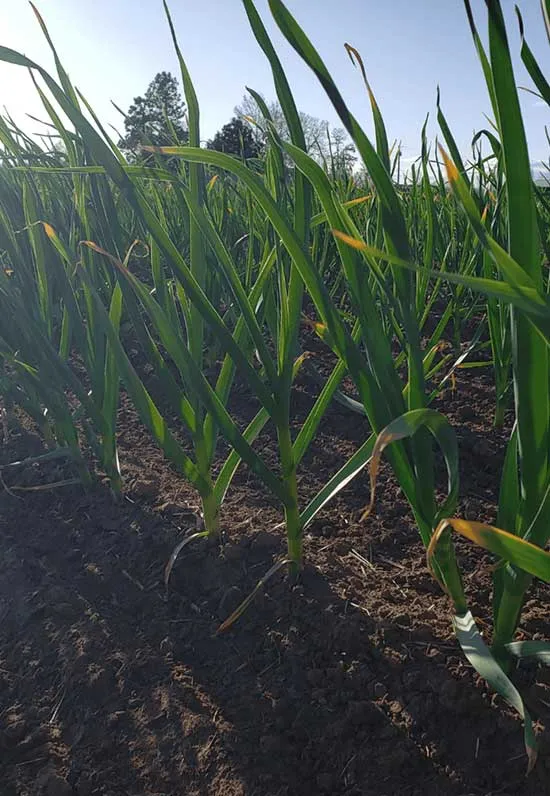
How to Plant Garlic
The purpose of these garlic growing instructions is to answer questions we hear all the time about how to plant your garlic and what you should do once you receive your garlic from us. Below are our recommendations for what to do once you get your garlic in the mail.
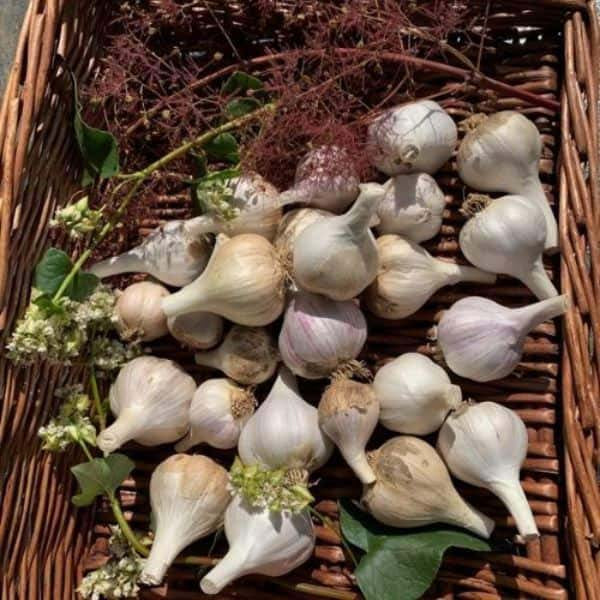
Before You Plant
If You Can’t Plant Right Away
Store your garlic in a cool, dry place with good airflow. A mesh bag, paper bag, or open cardboard box in a garage, basement, or pantry works well. Avoid sealed plastic bags, refrigerators, or anywhere with high humidity. Garlic stored this way will keep for several weeks until you’re ready to plant.
Fall Garlic Planting
Garlic is planted in the fall. The goal is to get it in the ground 4 to 6 weeks before your ground freezes.
- Northern states (zones 3–6): Mid-October to early November
- Middle states (zones 6–7): Late October to mid-November
- Southern states (zones 8–10): November through January
Not sure what zone you’re in? Search “USDA plant hardiness zone” and enter your zip code.
Why Fall Planting Matters
Hardneck garlic requires vernalization — an extended period of cold ground temperatures (below 40°F for 6 to 12 weeks) to form a proper bulb. Without vernalization, hardneck garlic won’t divide into individual cloves. You’ll just get one large, round clove instead of a full bulb.
Softneck garlic does not strictly require vernalization and can produce bulbs without it. However, softneck varieties still benefit from cold exposure and will produce larger, better-formed bulbs when fall-planted. We recommend fall planting for both types.
Planting
Break Apart the Bulbs
Separate your garlic bulb into individual cloves right before planting. Don’t do this days in advance. Leave the papery skin on each clove — it protects the clove in the ground.
Orientation
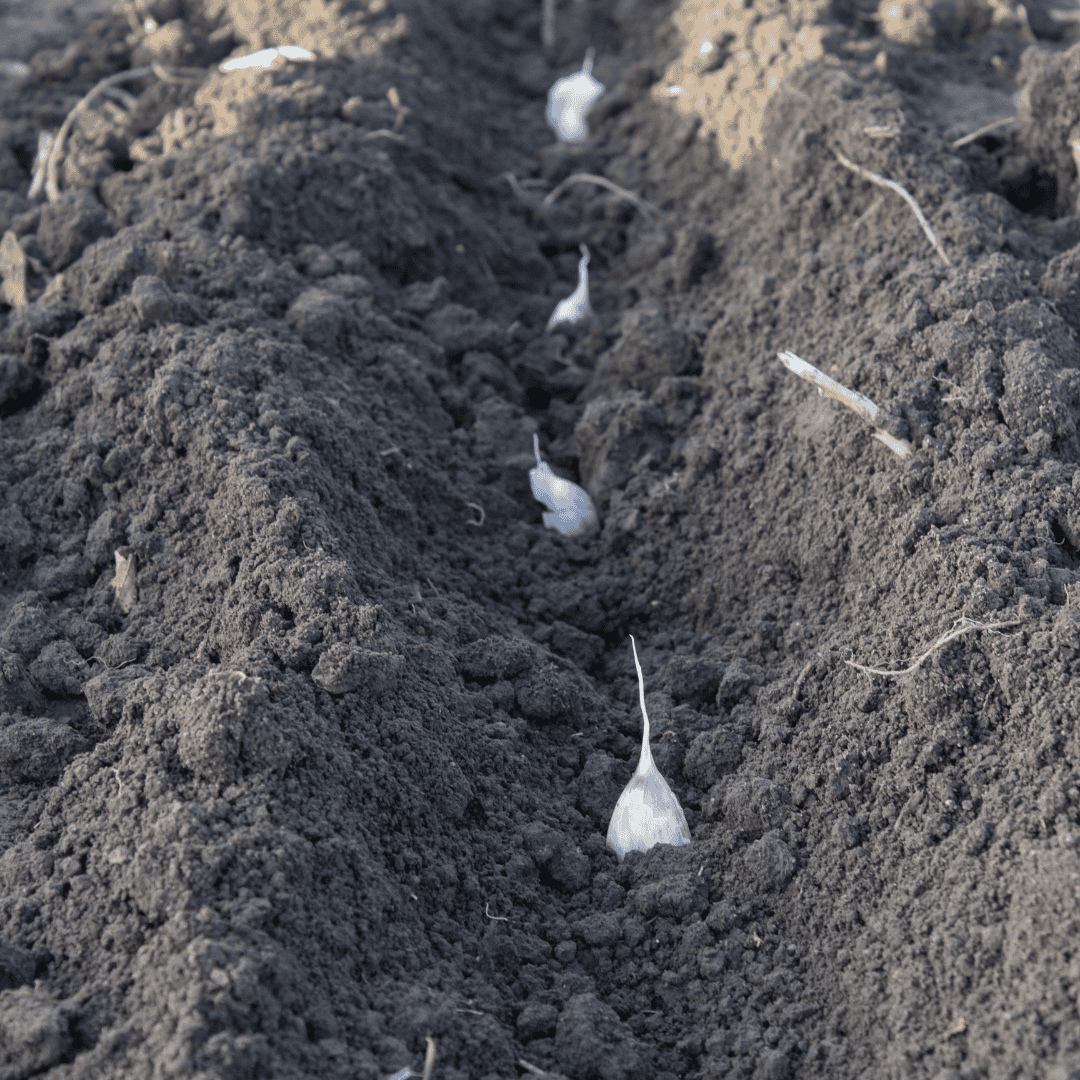
Pointy end up, flat end down. The flat end is where roots come out. The pointy end is where the shoot emerges. If a few end up upside down, the garlic will usually correct itself, but it wastes energy doing so.
Depth
- Mild climates: 2 to 4 inches deep
- Cold climates: 4 to 6 inches deep
Deeper planting in cold areas prevents frost heaving, where freeze-thaw cycles push cloves out of the ground.
Spacing
Spacing depends on clove size. Larger cloves produce larger bulbs and need more room.
- Large cloves: 6 inches apart in all directions
- Small cloves: 4 inches apart in all directions
Water Immediately
Give everything a thorough soaking right after planting. This removes air pockets in the soil and ensures good contact between the clove and surrounding soil so roots can start developing.
Prepare Your Planting Area
What Garlic Needs
- Full sun — at least 6 to 8 hours of direct sunlight per day
- Well-drained soil — garlic sitting in waterlogged soil will rot
- Loose, workable soil — compacted soil restricts bulb growth
Work a couple inches of compost into the top 6 to 8 inches of soil before planting. This improves drainage, adds nutrients, and loosens things up.
In-Ground
Any garden bed that meets the sun and drainage requirements above will work. If your soil is heavy clay, amend it with compost or consider a raised bed.
Raised Beds
Raised beds are a great option, especially if your native soil has poor drainage. Fill with a mix of quality garden soil and compost. A bed depth of at least 8 to 10 inches gives garlic enough room for root development.
Containers
Garlic grows well in containers as long as they’re deep enough. Use a pot or grow bag that’s at least 10 to 12 inches deep with drainage holes. Fill with a well-draining potting mix. Container garlic dries out faster than in-ground garlic, so plan on checking moisture more frequently.
Mulch
Cover your planted garlic with 3 to 4 inches of mulch. Straw and shredded leaves both work well. Avoid anything with weed seeds.
Mulch does three things:
- Insulates the soil against extreme temperature swings
- Suppresses weeds
- Retains moisture
Don’t skip this step. It makes a significant difference in both plant survival and how much work you’ll have to do in spring.
Winter Care
There’s almost nothing to do during winter. Your garlic is growing roots underground even though you can’t see anything happening.
If you’re in an area with little winter rain or snow, check the soil every few weeks. If the top couple inches are completely dry, give it a light watering. In most climates, natural precipitation is enough.
Green shoots poking through the mulch before winter ends is normal and not a problem.
Spring Care
Watering
Garlic needs about 1 inch of water per week during the growing season. If rain covers it, you don’t need to supplement. Stop watering 2 to 3 weeks before harvest to let the bulbs dry down.
Container garlic will need more frequent watering — check the top inch of soil every couple of days and water when it’s dry.
Feeding
When green growth is 4 to 6 inches tall in early spring, apply a balanced organic fertilizer or side-dress with compost. Each leaf your garlic produces corresponds to one protective wrapper on the bulb. More healthy leaves means more bulb wrappers, which means better storage life.
Weeding
Keep weeds out of your garlic bed. Weeds compete directly for nutrients and water. If you mulched well in the fall, this should be manageable. Pull weeds by hand to avoid disturbing garlic roots.
Scapes (Hardneck Varieties Only)
In late spring to early summer, hardneck garlic varieties will send up a curly stalk from the center of the plant. This is called a scape. It’s the plant’s flower stalk.
Remove scapes once they’ve made one full curl. Cut them approximately 4 inches above the last leaf. This is important — cutting too close to the plant allows water and debris to collect in the open stem as the cut end withers, which can lead to disease. Leaving that 4-inch buffer protects the plant.
Removing scapes redirects the plant’s energy into the bulb, resulting in noticeably larger bulbs at harvest.
Scapes are edible and delicious — use them in stir fries, pesto, grilled, or anywhere you’d use garlic. Don’t throw them away.
Hardneck varieties that produce scapes: Music, Chesnok Red, Korean Mountain, Thai Purple.
Softneck varieties do not produce scapes: Inchelium Red, Susanville, Sicilian Artichoke, California Early.
Harvest
When to Harvest
Garlic is ready when about half to two-thirds of the leaves have turned brown from the bottom up while the top leaves are still green. This is typically mid to late summer (July for most areas).
Each green leaf represents one protective wrapper around the bulb. You need a minimum of 5 intact wrappers for good storage. If you wait too long and too many leaves die off, you’ll have too few wrappers and the bulbs won’t store well.
How to Harvest
Do not pull garlic out by the stalk. Use a garden fork or shovel to loosen the soil around each bulb, then gently lift it out. Pulling risks breaking the stem or damaging the bulb.
Shake off loose dirt. Do not wash. Do not remove the outer wrappers. Leave everything intact.
Curing
Curing is drying your garlic so it stores properly. Do not skip this step.
Hang your garlic or lay it out on a rack in a dry, shaded area with good air circulation. A covered porch, garage, or barn works well. Keep it out of direct sunlight. Leave stems, roots, and wrappers intact.
Cure for 3 to 4 weeks. The garlic is done when:
- Wrappers feel dry and papery
- Stems are completely dried out
- The root plate on the bottom is hard
Storage
Trimming
Once fully cured, trim roots close to the bulb. Cut stems to about 1 inch above the bulb. If you’re braiding softneck varieties, leave the stems long.
Storage Conditions
Store cured garlic in a cool, dry, dark place with good airflow. A mesh bag, paper bag, or open basket works well. Never store in sealed plastic — garlic needs to breathe or it will mold.
Expected Storage Life
- Hardneck varieties (Music, Chesnok Red, Korean Mountain, Thai Purple): 4 to 7 months
- Softneck varieties (Inchelium Red, Susanville, Sicilian Artichoke, California Early): up to 9 months or longer
Save Your Best Bulbs
Set aside your biggest, healthiest bulbs to replant next fall. After a few years of doing this, your garlic adapts to your specific growing conditions and improves over time.
Hardneck vs. Softneck: Quick Reference
Hardneck varieties:
- Produce scapes in late spring — remove them 4″ above the last leaf for larger bulbs
- Require vernalization (cold exposure) for proper bulb formation
- Fewer, larger cloves per bulb — easier to peel
- Best in cold climates (zones 2–7)
- Shorter storage life (4–7 months)
- More complex flavor profiles
Hardneck clove counts by variety:
- Music (Porcelain): 4–6 cloves per bulb
- Chesnok Red (Purple Stripe): 12–17 cloves per bulb
- Korean Mountain (Asiatic): 4–6 cloves per bulb
- Thai Purple (Turban): 6–8 cloves per bulb
Softneck varieties:
- No scapes — no action needed
- Do not require vernalization but still benefit from fall planting and cold exposure
- More cloves per bulb, smaller clove size
- Tolerate milder climates better (zones 5–10)
- Longer storage life (up to 9+ months)
- Flexible stems that can be braided for hanging storage
Softneck clove counts by variety:
- Inchelium Red (Artichoke): 8–15 cloves per bulb
- Susanville (Artichoke): 10–16 cloves per bulb
- Sicilian Artichoke (Artichoke): 12–18 cloves per bulb
- California Early (Artichoke): 10–20 cloves per bulb
Common Issues
Garlic didn’t form bulbs (just one big round clove): Hardneck garlic didn’t get enough cold. It needs weeks below 40°F to trigger bulb formation. Make sure you’re planting in the fall. Softneck varieties are more forgiving but still produce better bulbs with cold exposure.
Small bulbs: Usually caused by too much weed competition, not enough water during spring, planting too late, or spacing too tight.
Cloves rotting in the ground: Poor drainage. Amend soil with compost, switch to raised beds, or choose a better-drained location.
Shoots came up in winter: Normal. The garlic is fine. Leave it alone.
Bulbs falling apart at harvest: Waited too long to harvest. You want at least 5 intact wrappers. Next year, harvest earlier — when half the leaves are still green.
Questions? Visit our contact form or reach out to us on Facebook— we’re always happy to help.